How Long Do Asphalt Shingles Really Last in Idaho?
The real lifespan of asphalt shingles in Idaho's climate — not the marketing number — based on 4,000+ Treasure Valley roof inspections.
We regularly see homeowners puzzled when their 30-year shingles fail a decade early.
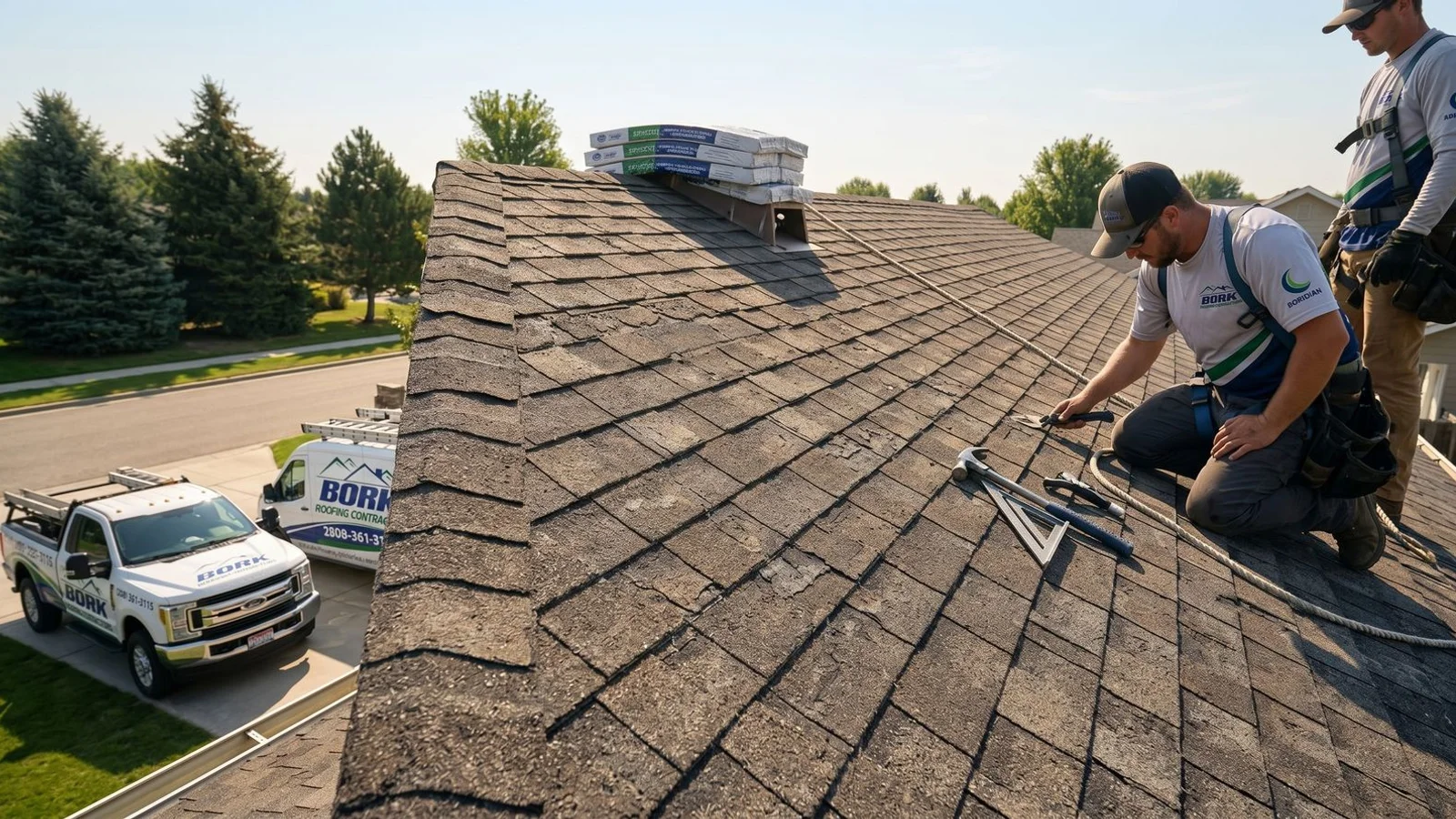
The question of How Long Do Asphalt Shingles Really Last in Idaho is a common one in the Treasure Valley. Our team has inspected over 4,000 roofs across the region to find the truth.
Those manufacturer ratings are based on perfect laboratory conditions. We know that the local climate strips away those perfect conditions immediately.
Let’s look at the actual data, what it tells us about your property, and how targeted roof repair can protect your investment.
How Long Do Asphalt Shingles Really Last in Idaho: The Marketing Number vs. Reality
We often explain that a “Lifetime” warranty does not mean your roof will last forever. Manufacturer lifespan ratings assume perfect ventilation, flawless installation, moderate UV exposure, and zero hail.
Our field data tells a very different story about asphalt performance in the Treasure Valley. The high elevation and dramatic temperature swings easily cut a typical 30-year lifespan down to 20 years.
| Shingle Type | Marketing Claim | Actual Idaho Lifespan |
|---|---|---|
| Three-tab shingles | 25 Years | 15-18 years |
| Standard architectural | 30 Years | 20-25 years |
| Premium architectural | 40-50 Years | 22-28 years |
| Class 4 impact-rated | 50 Years | 25-30 years |
| Luxury/designer | Lifetime | 25-35 years |
We stopped installing basic three-tab shingles in 2012 because they simply cannot withstand our local weather. Brands like Timberline HDZ, Duration, and Landmark offer a better baseline for standard architectural options.
Our inspectors find that individual outcomes still vary wildly based on specific property conditions. Ventilation, sun exposure, and storm history dictate the final number.
What Actually Kills an Idaho Asphalt Roof
UV Degradation (The Biggest Factor)
We rank ultraviolet light as the primary destroyer of local roofing systems. At an elevation of over 2,700 feet, Boise and Meridian experience roughly 20% more UV exposure than coastal cities.
Our temperature readings show that dark-colored asphalt roofs can reach a blistering 160 degrees Fahrenheit on July afternoons. This intense heat bakes the asphalt binder holding the protective granules in place.
We commonly see south and west-facing slopes fail years before the north side. Once those granules wash away, the exposed mat will deteriorate completely within two to three years.
Poor Ventilation
We consider inadequate attic airflow to be the silent killer of roofing materials. A poorly ventilated Meridian home can easily trap heat and moisture, pushing attic temperatures past 150 degrees Fahrenheit.
Our crews routinely find 20-year-rated shingles completely cooked from underneath by year twelve. The International Building Code standard requires one square foot of net free vent area for every 150 square feet of attic space.
We evaluate this 1/150 rule on every inspection to ensure balanced ridge and soffit intake. Most homes built before 2010 fall drastically short of this necessary airflow target.
Hail and Wind
We see severe weather subtract years from a roof’s life in a matter of minutes. Spring thunderstorms in Ada and Canyon counties regularly bring 60 mile-per-hour wind gusts.
Our repair logs show that every major hail event with one-inch stones takes two to five years off a shingle’s remaining life. This damage occurs even if the bruising is not visible enough to trigger a homeowner’s insurance claim.
We also find that strong winds lift tabs, crease the mat, and create weak points that leak later. Class 4 impact-resistant materials provide the best defense against these frequent local storms.
Ice Dam Damage
We respond to hundreds of emergency calls every winter caused by ice buildup along the eaves. Ice dams force freezing water backward under the shingles, permanently damaging the material.
Our post-winter inspections frequently uncover cracked, curled, and delaminated shingles from freeze-thaw stress. Proper insulation and an ice-and-water shield layer are your best tools against this seasonal threat.
Installation Quality
We must acknowledge that human error causes just as many failures as the weather. Nailing mistakes account for a huge percentage of the premature replacements we handle.
Our installers strictly follow manufacturer specifications, requiring four to six properly placed nails per shingle. Many cheap installations feature nails driven too high, overdriven through the mat, or spaced improperly.
We have inspected pristine 30-year-old roofs that survived simply because the original crew did the job right. The contractor you choose matters just as much as the brand of material you buy.
How to Tell How Much Life Yours Has Left
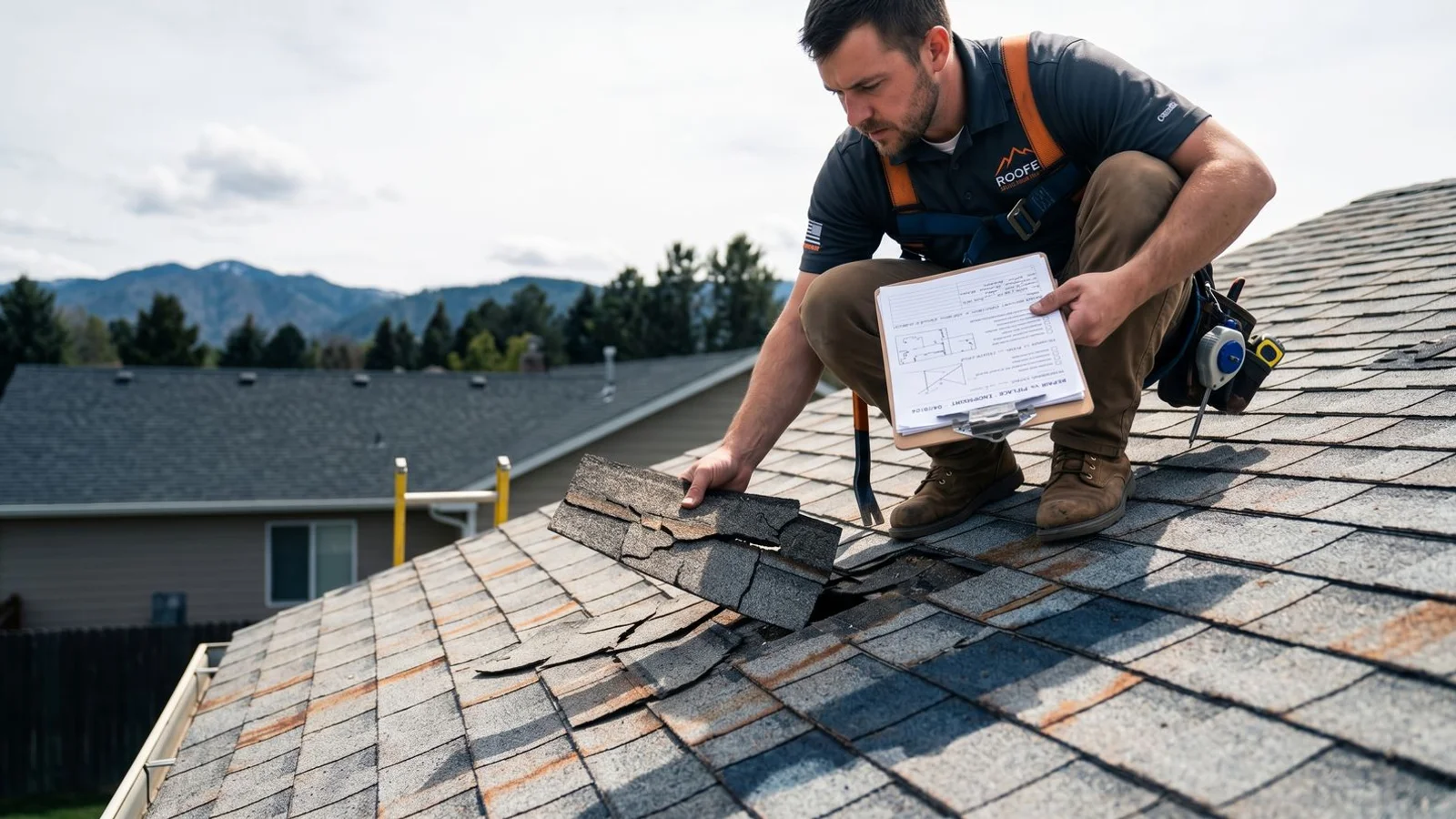
We want you to know exactly what to look for when evaluating your own property. Visual cues tell a clear story about the remaining timeline for your asphalt surface.
Our team uses a straightforward four-stage assessment during every professional inspection. Review this simple breakdown to estimate your current status.
- Good condition: Uniform color, shingles lying flat, no bald spots, and clean gutters indicate five or more years remaining.
- Fair condition: Slight fading on sun-facing slopes and minor granule loss mean you have roughly two to five years left.
- Poor condition: Visible bald spots, curling edges, cracked shingles, and heavy moss growth signal a need for replacement within one to two years.
- End of life: Missing tabs, exposed fiberglass mats, water staining in the attic, or active leaks require immediate replacement.
We highly recommend viewing your roof from the ground with binoculars rather than climbing a ladder. Safety should always be your top priority during any home maintenance check.
Extending the Life You Have
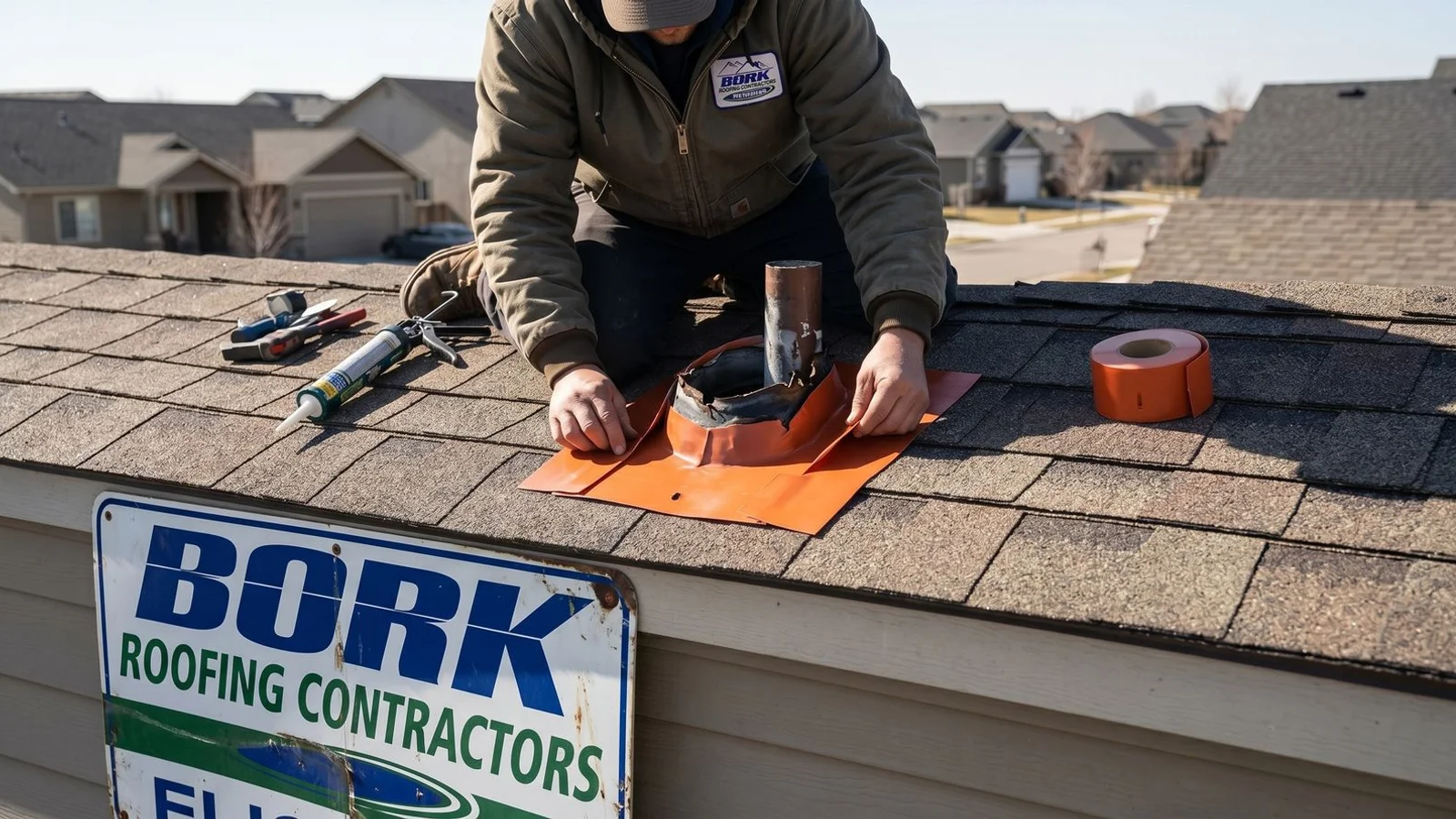
We help property owners squeeze every possible year out of their existing systems. Proactive care stops minor issues from turning into major leaks.
Our Bork Maintenance Program is designed specifically to combat the harsh Idaho climate. Starting at $295 per year, this service includes sealant refreshes, debris removal, and airflow verification.
We also recommend professional soft washing to remove destructive algae and moss. Annual maintenance can realistically add three to five years to a roof’s total life.
Time for a Check-Up?
We offer complete transparency when evaluating the health of your home’s exterior. Understanding How Long Do Asphalt Shingles Really Last in Idaho gives you an advantage.
Our inspections are completely free, provided in writing, and always honest. Call (208) 361-3115 today to schedule your consultation.